
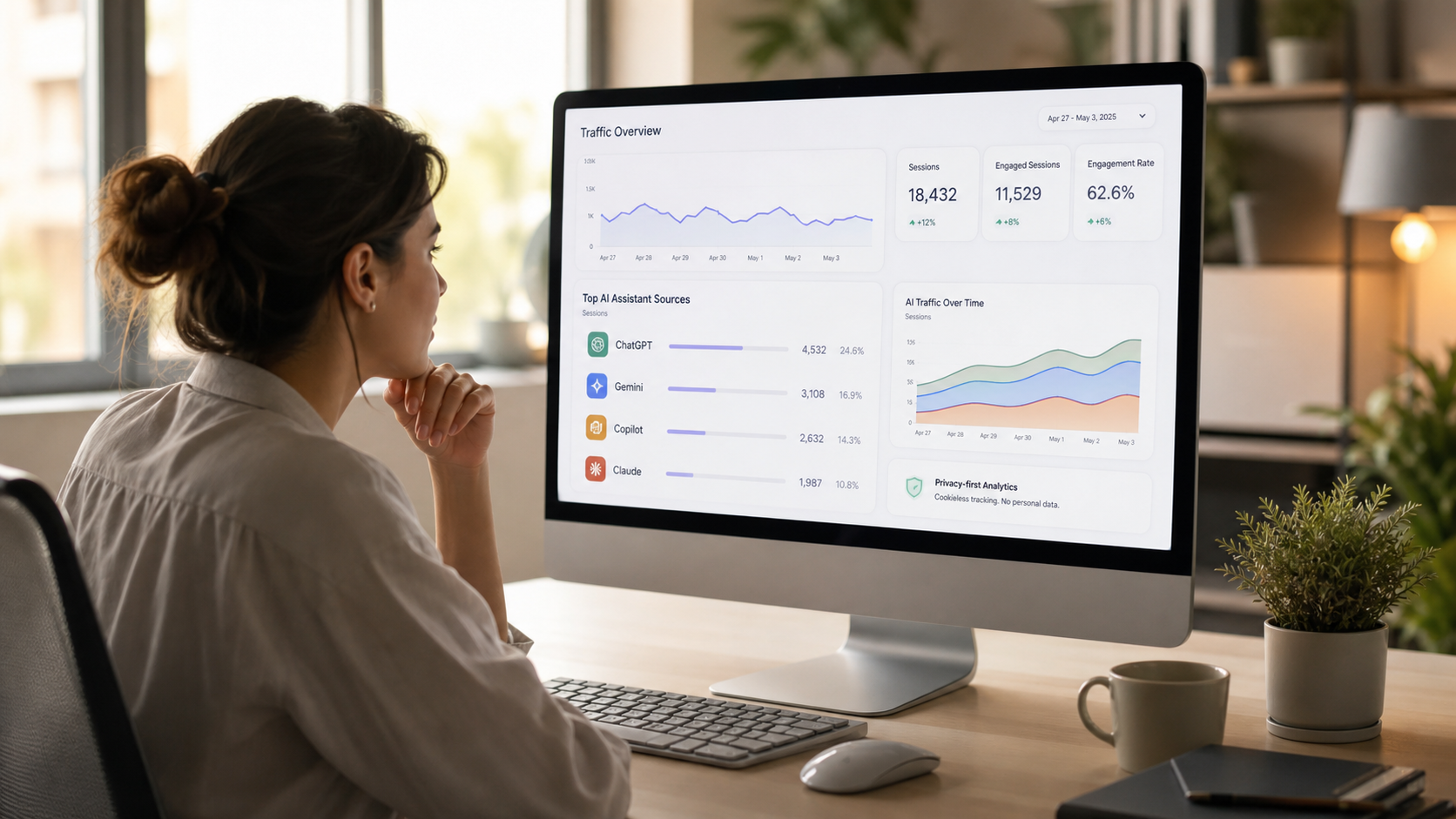
AI assistants are becoming a new discovery channel. When a visitor clicks a recommendation generated by ChatGPT, Copilot, Gemini, Claude, Perplexity or another assistant, your analytics should help you understand what happened after that click, which page answered the need and whether the visit became a real business opportunity.
Why AI assistant traffic matters
People increasingly use AI tools to research products, compare services and find practical answers. Some of those conversations end with a link to your website. Treating that traffic as a visible acquisition source helps you understand whether AI recommendations are creating useful visits, qualified leads or sales. It also keeps the channel from disappearing inside direct traffic or generic referrals.
Start with acquisition reports
In MINASTRACK, begin with your acquisition overview and traffic source reports. Compare AI assistant traffic with search engines, social networks, referrals, campaigns and direct visits. Look beyond volume: check landing pages, engagement, conversions and revenue when ecommerce data is available. A small number of AI visits can still be valuable if they arrive with strong intent. Add annotations when you change content or publish a new guide, because AI traffic often reacts to the usefulness and clarity of public pages.
Identify known AI sources
Group visits from assistants such as ChatGPT, Copilot, Gemini, Claude, Perplexity, Le Chat, Meta AI and similar tools. Some visits may arrive with a clear referrer, while others may be harder to classify because apps, browsers or privacy settings can hide the original source. Keep a documented list of known AI domains and update it regularly as the ecosystem changes. This list should be reviewed like any campaign naming convention, because new assistants, mobile apps and embedded browsers can appear quickly.
Inspect individual visits carefully
Visitor-level views help you see what happened during a session that began from an AI assistant. Review the landing page, actions taken, pages viewed and goal completions. This is useful for spotting patterns: AI visitors may arrive on educational content, pricing pages or comparison pages with a different intent from search traffic. Avoid drawing conclusions from one visit; look for repeated behaviour across several sessions and compare it with search traffic, referral traffic and direct visits before changing a page.
Analyse behaviour after the landing page
The most useful question is not only where the visitor came from, but what they did next. Review transitions, top pages and conversion paths to understand whether AI traffic continues to product pages, forms, documentation or checkout. If many visitors leave after one answer page, add clearer next steps. If they move toward pricing or contact, make those routes easier to follow.
Create a dedicated segment
Build a segment for visits identified as AI assistant traffic. Then compare that segment across your standard reports: device type, landing pages, campaigns, conversions, revenue and returning visits. Segmentation makes the channel easier to evaluate without mixing it into broader referral or direct categories. Use the same segment over time so trends remain comparable. If the definition changes, write it down in your reporting notes so future comparisons do not mix two measurement methods.
Understand historical limits
AI traffic classification works best from the moment your tracking rules and source definitions are in place. Older visits may have been stored as referral, direct or another channel, so they cannot always be reconstructed perfectly. Note the date when you introduced AI tracking and interpret before-and-after comparisons with care.
Turn the insight into action
Once AI traffic is visible, decide what to improve. Strengthen pages that assistants often cite, add clear calls to action, maintain helpful public content and check that technical pages expose accurate titles and descriptions. Review the report monthly with other acquisition channels. The goal is not to chase every AI mention, but to understand whether this new discovery path supports your business objectives.